Two Stamm-built homes go under contract in Casa Solana this fall, a few blocks apart. One disclosure sheet lists the roof at 14 years old. The other lists 6. On paper, the second home looks like the safer bet. A buyer comparing the two on age alone would lean toward the newer roof and move on.
That comparison is backwards more often than it's right, and the reason has nothing to do with either seller hiding something. It has to do with what kind of roof sits on almost every home in this neighborhood, and what actually determines whether it fails.
One Builder, One Roof System, Citywide
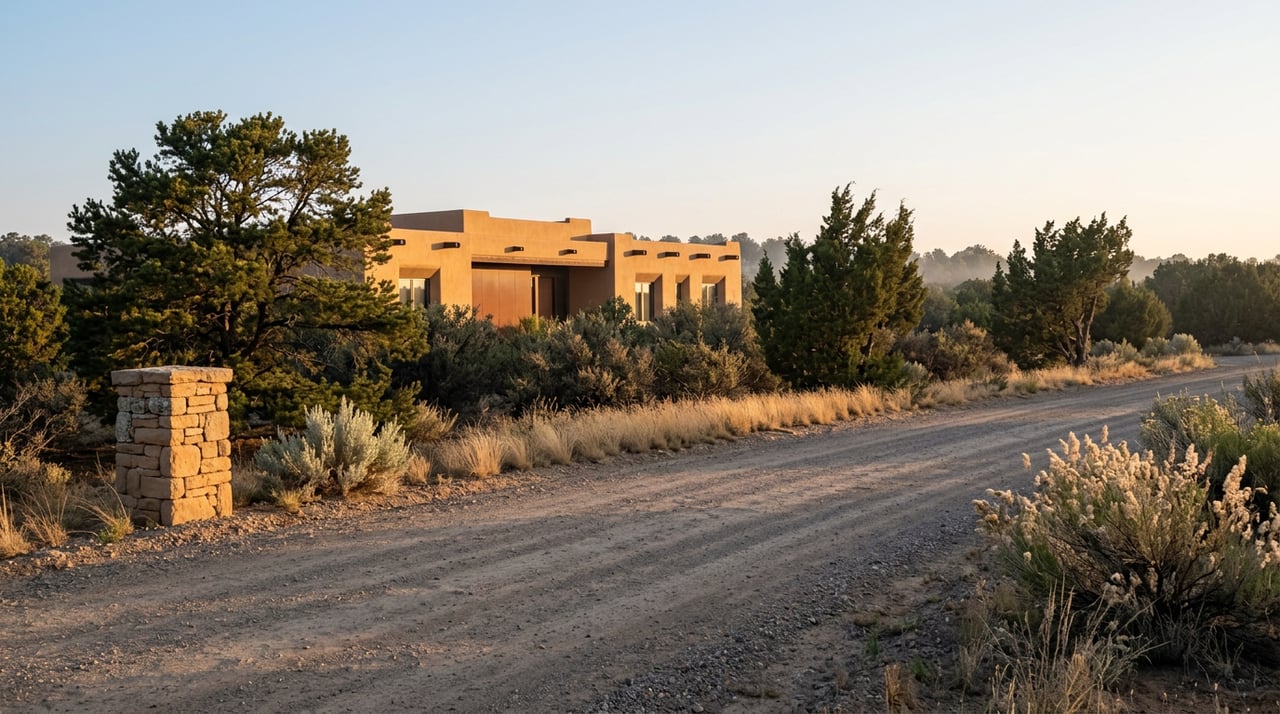
Casa Solana isn't a mix of eras and builders the way a lot of Santa Fe neighborhoods are. Nearly the whole subdivision traces back to Allen Stamm, who developed the area west of downtown along West Alameda through the 1950s and into the 1960s. Walk into any unrenovated Stamm house and you'll recognize the signature immediately: original hardwood floors, a kiva fireplace tucked into a corner, exposed vigas overhead, small plaster nichos built for art or pottery. Stamm even skipped front fences on purpose, wanting neighbors to talk across open lawns.
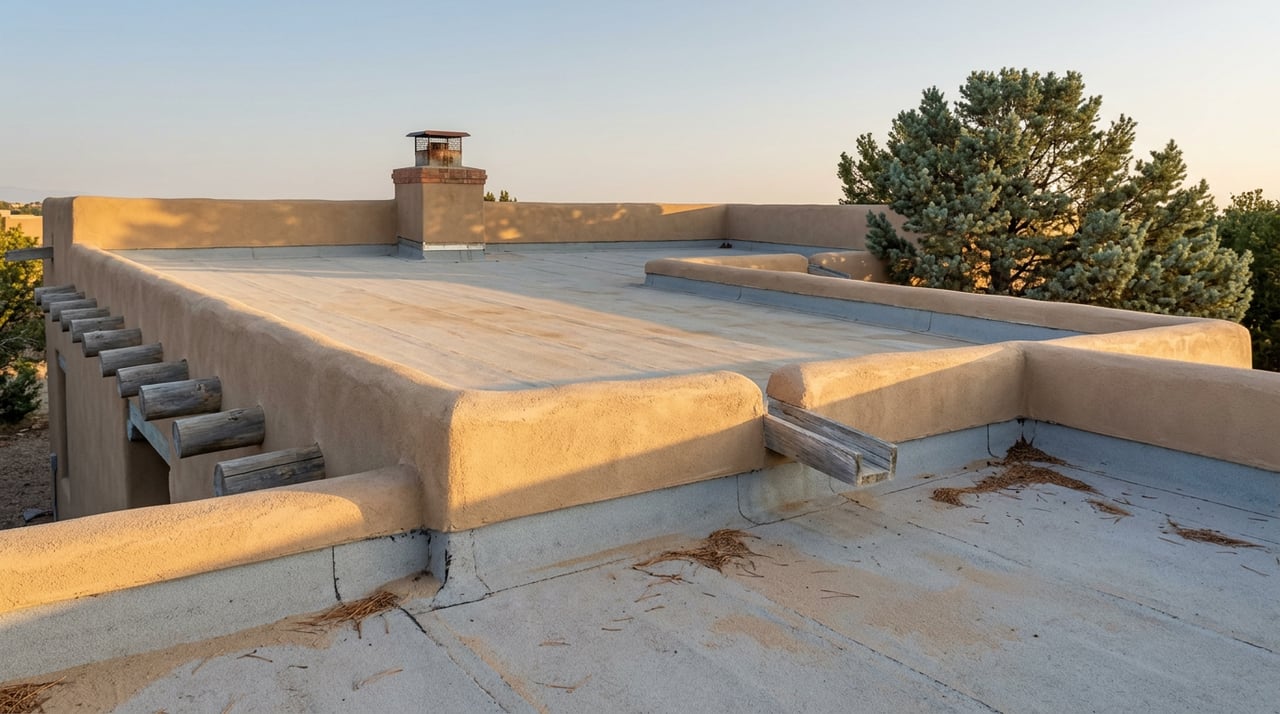
That consistency extends above the ceiling too. The low-slope, flat-roof profile common to Pueblo-style homes of that era means most original Casa Solana roofs are built-up roofing systems, layered membrane assemblies rather than shingles. Some homes have since been reroofed with asphalt shingle or other materials, so it's not universal, but the flat built-up roof is close to a neighborhood default for anything that hasn't already been replaced.
That matters because a built-up roof doesn't age the way a shingle roof does, and the disclosure sheet doesn't make the distinction.
Age Tells You Less Than the Maintenance Record Does
Asphalt shingle roofs wear down on a fairly predictable curve tied mostly to time and sun exposure. Built-up roofs work differently. The membrane itself can last decades, but it depends entirely on a protective coating that has to be reapplied on a cycle, typically every four to six years, to keep UV exposure from breaking it down. Skip that maintenance and a technically younger roof can be in worse shape than an older one that's been coated on schedule. Keep up with it and a 14-year-old built-up roof can have more real life left than a 6-year-old one nobody has touched since installation.
This is the piece that doesn't show up in a single line item labeled "roof age." A seller who says the roof is six years old is telling the truth. They just may not be telling you anything about whether it's been recoated once, or ever.
Santa Fe's Climate Doesn't Give a Roof Any Slack
The math above assumes a roof aging under ordinary conditions. Santa Fe doesn't offer ordinary conditions. Roofing contractors working the area point to daily temperature swings of 40 to 50 degrees Fahrenheit as a routine part of the climate here, and that constant expansion and contraction loosens fasteners, pulls flashing away from walls, and opens seams over time in a way milder climates don't produce. Add the monsoon pattern of hard, fast summer storms, and a flat roof with even minor ponding issues gets tested every year in a way a pitched roof rarely is.
Materials that hold up for decades elsewhere in the country can start showing real wear here in closer to ten years. That's the backdrop against which a Casa Solana roof's maintenance history has to be read. A recoat cycle that would be a nice-to-have somewhere with gentler weather is closer to load-bearing information here.
What This Costs When Nobody Asked
Rocky Mountain Roofing Services, a New Mexico-licensed contractor that has spent more than three decades inspecting roofs across Santa Fe, Eldorado, and Las Campanas, has flagged a pattern worth taking seriously: buyers who skip an independent roof inspection and rely only on a seller's "roof in good condition" disclosure have walked into repair bills north of $20,000 after closing. That's not a scare number pulled from a national survey. It's what happens specifically in this climate when a built-up roof's coating history was never checked before the offer went in.
A general home inspector will look at the roof, but roofing is its own specialty. If you're the one holding an offer on a Casa Solana Stamm home, the question worth asking before you're deep into a 10-day inspection period isn't "how old is the roof." It's "when was it last recoated, and is there a receipt." If the seller doesn't know, that's useful information too. It means you're the one who gets to find out, on your own schedule, before you're negotiating against a deadline.
Turning the Answer Into Leverage, Not a Wall
If the recoat history comes back thin, or a roofer's estimate shows the coating is overdue, that's not automatically a reason to walk. A weathered flat roof that isn't actively leaking doesn't need to be replaced before closing. What it needs is to be priced into the deal. The standard move is a closing credit sized to the coating or replacement cost a licensed roofer quotes in writing, not a demand for a brand-new roof on a home that was likely priced with its age already reflected. Sellers respond better to a number backed by an actual bid than to a guess, and buyers who show up with a bid in hand tend to get the credit without the deal turning into a standoff.
On the seller side, the fix is even simpler: get the roof looked at and recoated on schedule before listing, or at minimum keep the receipts. A Stamm home with documented recoat history is a fundamentally easier sell in Casa Solana than one with a mystery roof and a number on a form that nobody can back up.
None of this shows up if you're only comparing two disclosure sheets side by side. You can walk from a Stamm home to the Casa Solana Shopping Center, grab groceries at La Montañita Co-op, and never once think about what's happening on the roof over your head. That's kind of the point. The roof is supposed to be invisible until it isn't, and in a neighborhood built almost entirely around one builder's flat-roof design, the maintenance record is doing more work than the age line ever will.
FAQ
Does every home in Casa Solana have a flat, built-up roof? Most of the original Stamm-built homes from the 1950s and 60s were built with the low-slope, flat-roof profile typical of that era's Pueblo-style construction. Some have since been reroofed with asphalt shingle or other materials during renovations, so it's worth confirming the current roof type on any specific property rather than assuming.
What if the seller has no recoat records at all? No records isn't a deal-breaker, but it does shift the diligence onto you. Bring in a licensed roofer, not just a general home inspector, to assess the coating's condition and give a written estimate of remaining life. That estimate becomes the number you negotiate around instead of guessing.
Can a flat built-up roof be converted to a pitched roof during a renovation? It's technically possible, but it's a significant structural project, not a simple reroof, and it changes the home's original architectural profile. Most buyers and sellers in Casa Solana are working within the existing flat-roof system rather than converting it.
If you're weighing a Casa Solana offer and want a second set of eyes on what the disclosure sheet is and isn't telling you, Kenny Crowley has walked enough of these inspections to know which numbers are worth pushing on. Let's Connect before you write the offer, not after the inspection report lands.